Gamma Knife is a non-invasive stereotactic radiosurgery technique that precisely targets and destroys abnormal brain tissue without surgical incisions...
Book Appointment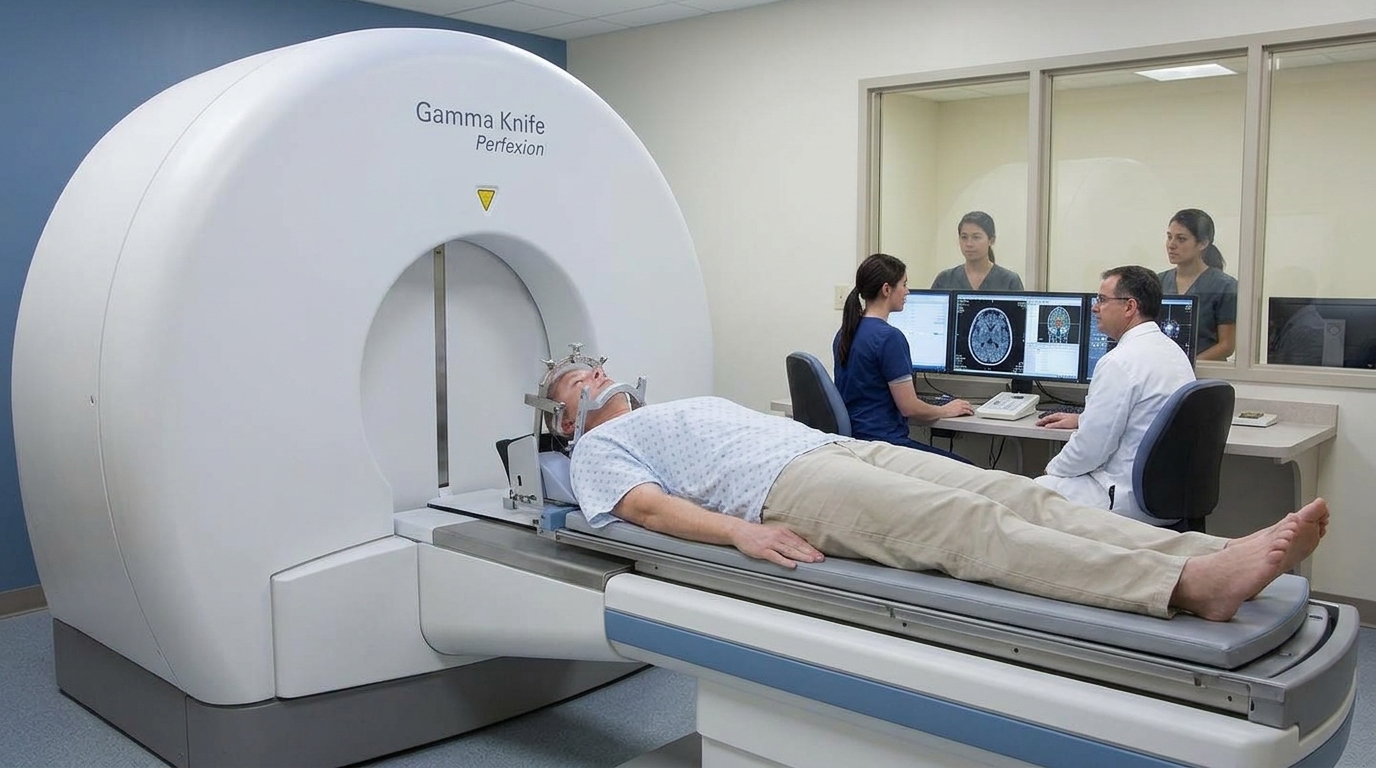
How Is Gamma Knife Treatment Performed?
The effectiveness of Gamma Knife treatment depends on the precision of the treatment system and the imaging techniques used to accurately identify the target area within the brain. Stereotactic guidance enables the exact location of the lesion to be determined, ensuring that radiation is delivered with a high degree of accuracy.
Before treatment, a metal stereotactic frame is attached to the patient's head to ensure precise positioning and immobilization throughout the procedure. Local anesthesia is administered at the points where the frame is secured to minimize discomfort.
On the day of treatment, the patient arrives at the hospital after having a light breakfast, as instructed by the medical team. The application of the stereotactic frame takes approximately 10 minutes.
Once the frame is securely positioned, detailed imaging of the target area is performed. Based on these images, the medical team prepares an individualized treatment plan, determining the target volume, radiation dose, and treatment angles.
After treatment planning is completed, the patient is positioned according to the treatment protocol. The procedure is explained in detail, and every effort is made to ensure the patient's comfort before treatment begins.
The patient is then positioned inside the Gamma Knife system, and radiation delivery is initiated. Focused radiation beams are delivered from multiple directions, converging precisely on the target while minimizing exposure to surrounding healthy brain tissue.
Once the planned radiation dose has been delivered, the patient is removed from the treatment unit, and the stereotactic frame is carefully removed. The patient is subsequently monitored in the hospital before discharge, according to their clinical condition.
Which Types of Brain Tumors Can Be Treated with Gamma Knife?
Gamma Knife is used in the treatment of various benign and malignant brain tumors. The suitability of treatment depends on factors such as tumor size, location, number of lesions, and the patient's overall clinical condition.
Benign brain tumors:
- Meningiomas
- Pituitary adenomas
- Vestibular schwannomas (acoustic neuromas)
Malignant brain tumors:
- Brain metastases
- Selected gliomas and other glial tumors
In